Chapter 4 · The Sonic Vanguard
Jimi Hendrix
The Sonic Alchemist · London & US Vanguard · Late 1960s
Rock & Roll Hall of Fame, 1992“Blues is easy to play, but hard to feel.”
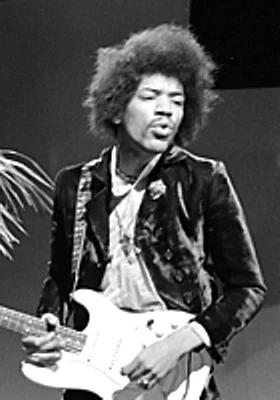
Jimi Hendrix performing on Dutch TV show Hoepla, 1967 — Netherlands Institute for Sound and Vision, licensed CC BY 3.0
The Story
After grinding through the Chitlin' Circuit backing R&B acts, Jimi Hendrix took the vocabulary he learned from Muddy Waters and B.B. King and ran it through fuzz pedals, a Uni-Vibe, and wall-to-wall Marshall stacks — blowing the sonic ceiling off the genre.
Hendrix proved electric blues could be heavy, cosmic, and louder than anything that came before it. Inducted into the Rock & Roll Hall of Fame in 1992 — the same class as Johnny Cash.
Sound & Gear Breakdown
- Aggressive use of Fuzz Face, Uni-Vibe, and Cry Baby wah
- Thumb-over chord-melody playing rooted in Curtis Mayfield and B.B. King
- Controlled stage feedback used as an expressive instrument, not a mistake
Essential Listens
Voodoo Child (Slight Return) (1968)
The apex of electric blues evolved into full-throttle heavy rock.
Red House (1967)
Pure, slow-burning, 12-bar blues mastery, unfiltered.
Legacy Impact
Demolished the limits of electric sound, laying the direct foundation for hard rock, funk rock, and heavy metal.
Lineage to Today
Every band we book running a pedalboard bigger than their amp head owes Hendrix a debt — he's the reason "more gear, more sound" became a legitimate rock and roll strategy, not just noise.